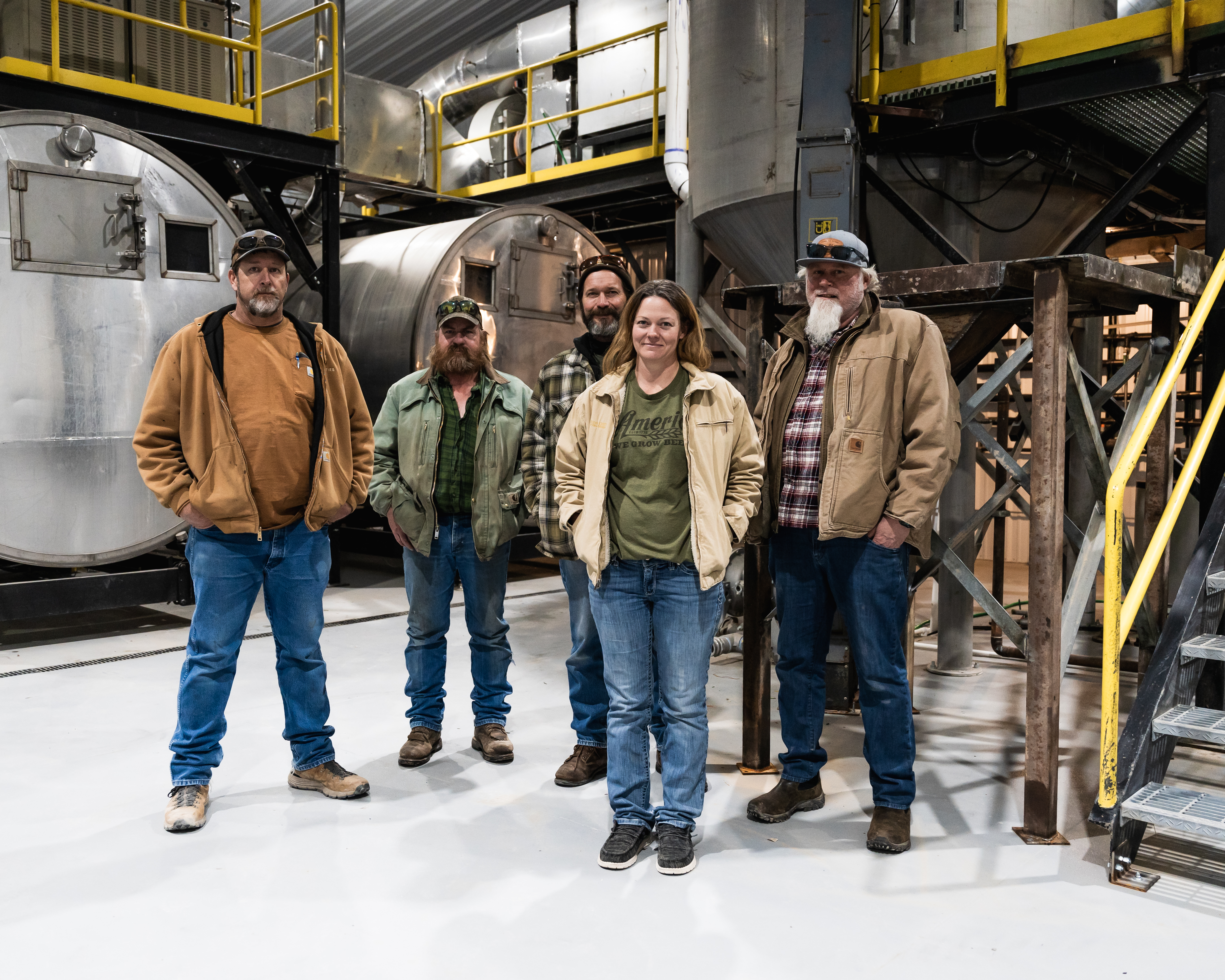
Back in February of last year, when I sat down with the Beer Creek brew crew for their Look Back/Look Ahead Series article, I was under the impression that we were going to talk about the usual burning questions on people’s minds — a patio opening date, when Black Wedding Black IPA was coming back, or with fingers crossed, when the new taproom might be opening. I was certainly not prepared for the huge Oppenheimer-sized news that Rich Headley was about to drop on me.
New Mexico is getting its first malting facility just north of Estancia!
Now, if you’re telling yourself I’ve heard of malting, but I’m not exactly sure what the difference is between malt and barley, and why it matters in brewing, let me help you out.
To put it very plainly, malting is the process of converting raw foraged barley into the specialized grain (malt) ideal for making beer. The malting process is important because it activates those crucial enzymes in the grains needed to convert starches into fermentable sugars, which give the beer most of its color, flavor, and mouthfeel.
Most grain used by American breweries is grown in the northern United States and Canada, and comes with hefty shipping costs that have only risen in the past few years. With a malting facility in New Mexico, local farmers can get their barley malted and ready for brewers, and more and more local breweries will have access to locally grown and malted grain, taking the concept of farm-to-taproom to a whole new level.
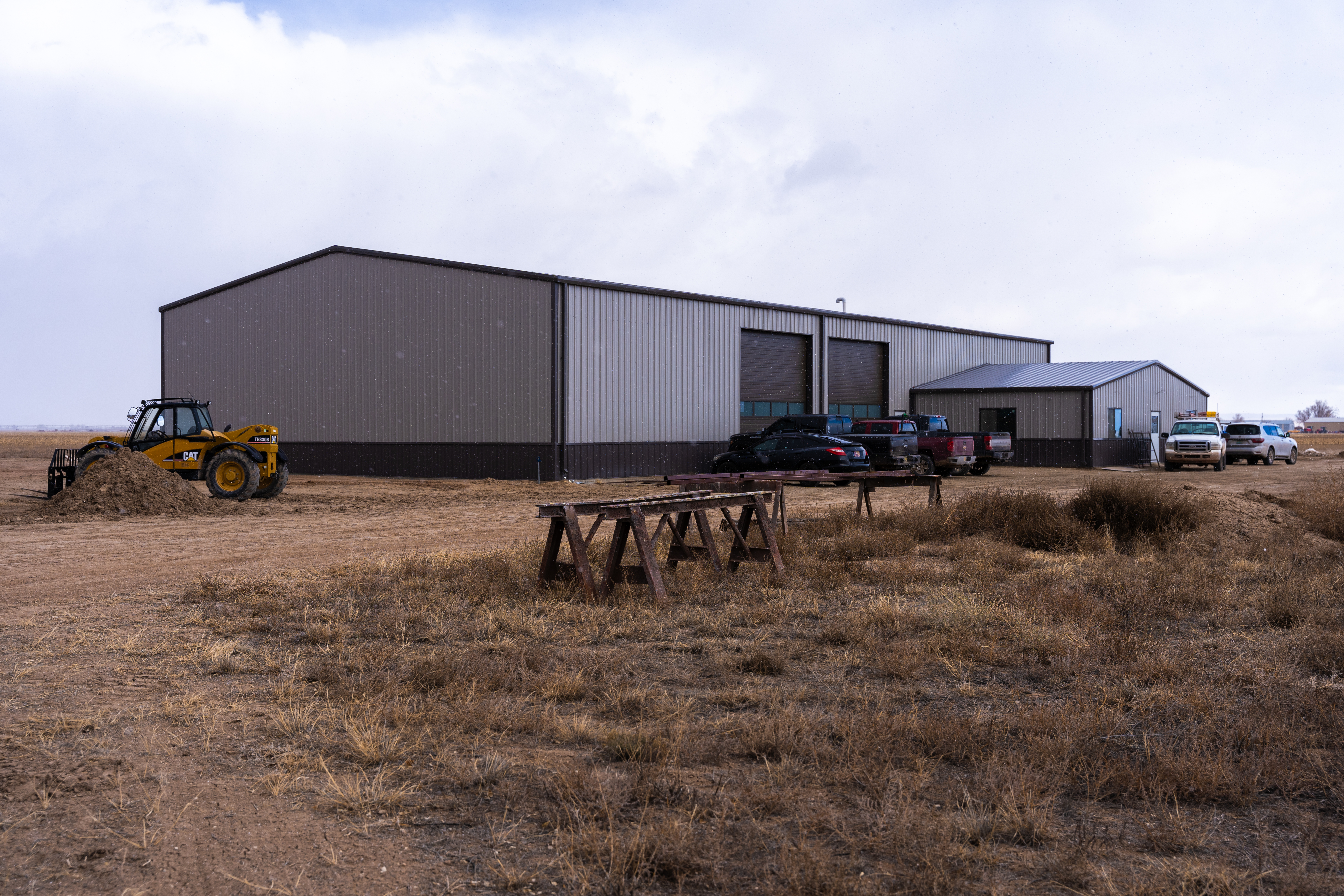
Beer Creek, as you’ve probably already heard by now, is the brewery currently making 100-percent New Mexico-grown beer, from locally grown hops and grain. And though much of this story wouldn’t be possible without them, but this particular story is not about Beer Creek.
This is a story about a local forage farm called Schwebach’s LLC, who, faced with many setbacks, impossible time crunches, and plenty of discouragement along the way, plowed ahead in pursuit of an idea to bring quality New Mexico grown and malted grain to the local market.
Schwebach’s and Beer Creek have put a lot of work into making this idea happen, and sooner than you think, the rest of the New Mexico beer industry will reap the benefits of what they’ve been sowing.
Schwebach’s is a family farm co-owned by Ryan Schwebach and his father, Jim Schwebach, not to be confused with Schwebach Farms owned by brother Dean and his wife Martha.
Ryan Schwebach is a third-generation farmer. He and his family have been in the local agricultural industry since 1959. They have 2,400 irrigated acres of land, primarily consisting of corn forage and alfalfa grown for the dairy industry, and it’s been a successful business for many years.
“(Forage farming) has treated us well, but the industry is changing,” Schwebach said. “And so, it’s forced us to be creative.”
Now, a great deal of their attention, and a healthy cropping of farmland, is focused on growing barley for local brewers.
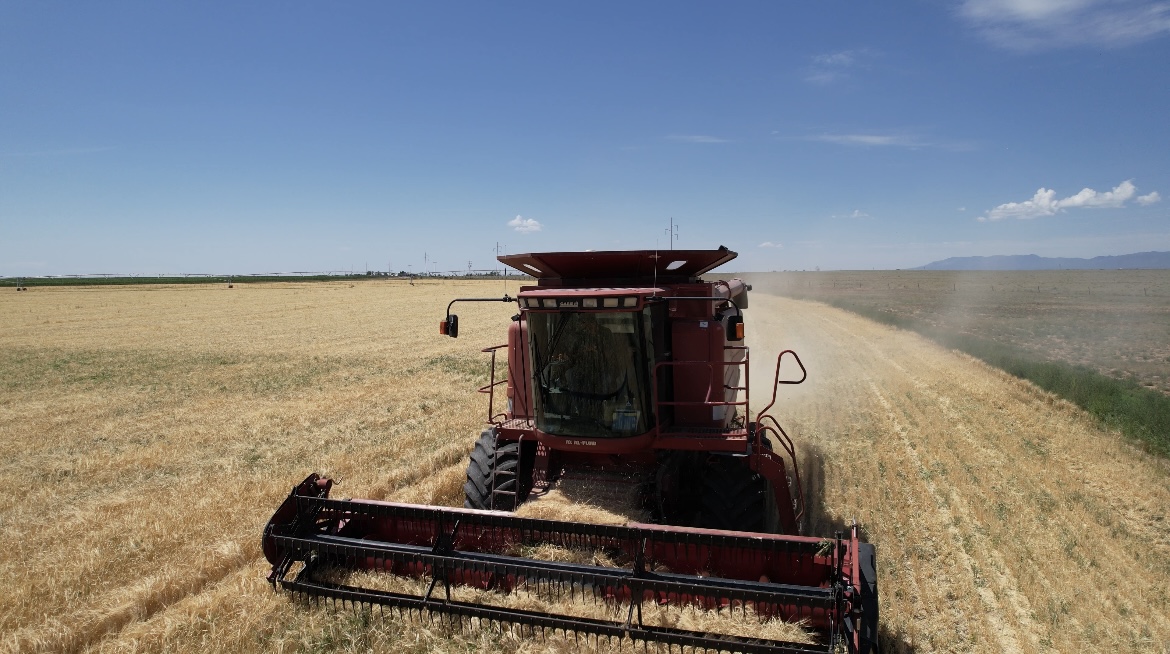
If you’re wondering how Schwebach initially got involved, well that story goes back to a man sipping on a beer with his friends, likely at a brewery in Las Cruces.
The way the story goes, David Lucero, Division Director of New Mexico State University (Department of Agriculture), was having a beer one day, and exclaimed to his hop friends that “the only thing in this beer that’s from New Mexico is the water.”
That thought didn’t settle well with him.
“He went ahead and he got New Mexico State to put out a study on growing barley, what would it cost to grow it, to malt it, and to put the numbers together,” Schwebach explained. “And then, he got a little bit of funds together, and he called me and five other farmers, and said you guys want to try this 5-acre plot? I can buy the seed. I can buy the bags. I can do all this. Let’s see if we can grow.”
Of the five, three farmers took on the challenge, but one of the crops was lost to bad hailstorm. The two that were left had no trouble growing the barley. It turns out that New Mexico soil likes the grainy cereal.
But, unmalted barley is no good to a brewer, and if you remember, the start of the conversation was beer.
Raw barley needs to be malted, and not just anyone can do it. Raw barley needs a facility large enough and clean enough to house the malting vats, and maintain a controlled environment, while it’s being processed. And, it needs a good maltster with a keen understanding of the process and the many variables along the way.

For our purposes, the malting process takes place in at least three phases.
Steeping
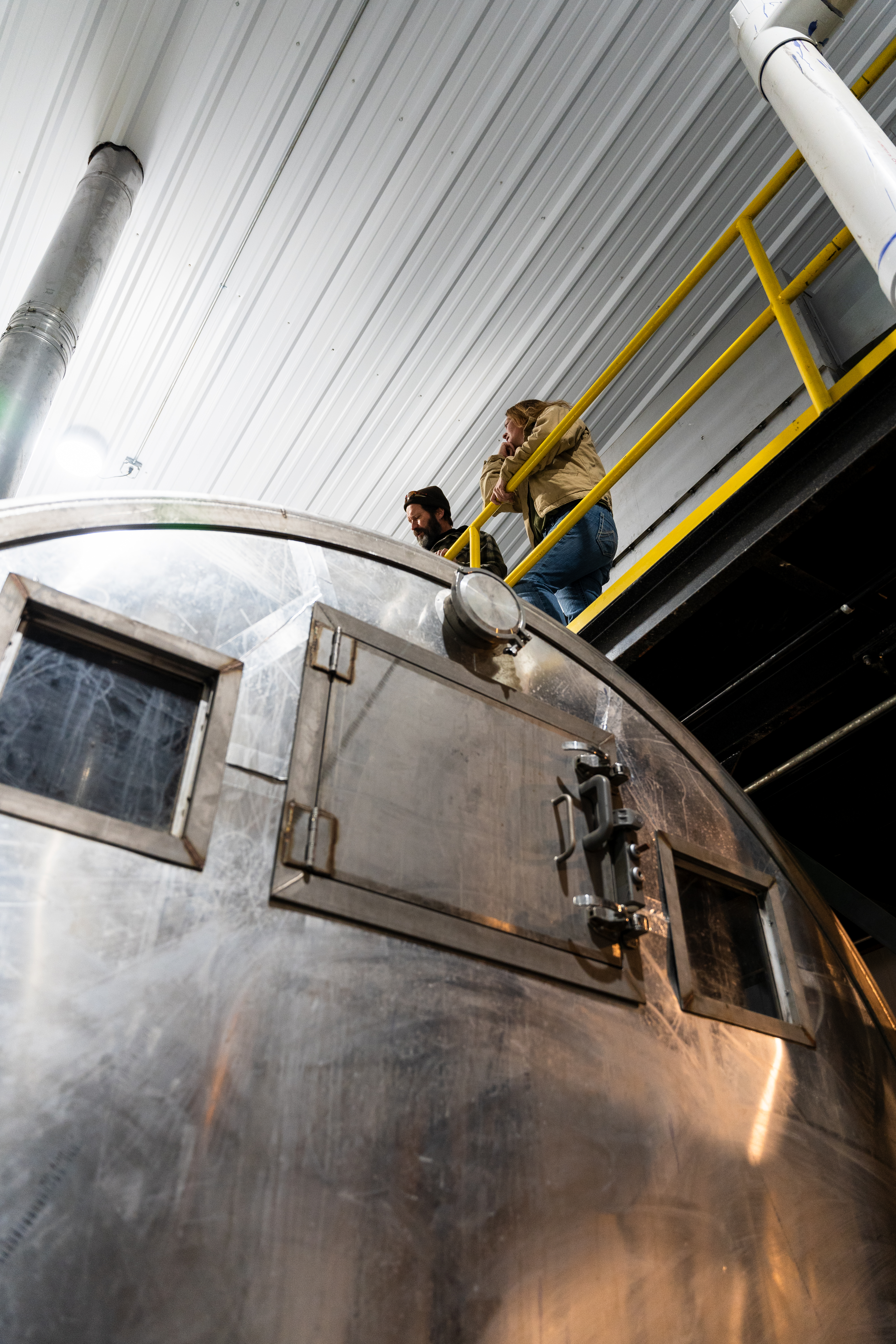
After being cleaned and sorted, the acceptable barley grains are steeped in water in huge vats. Over the next two or so days, water is drained and refilled, allowing the grains to absorb moisture or become exposed to air in a cycle of hydration and oxygenation. This cycle continues until the moisture content is around 45 percent, and the grain is evenly hydrated. When it begins to show signs of sprouting, the grain is then transferred into a germination chamber.
Germination
During germination, which could last from three to five days depending on the type of grain they’re making, the sprouting grain is kept at a certain temperature and regularly oxygenated with humidified air. The maltsters turn the large vats like enormous steam rollers to keep the grain from clumping and packing too tightly. During this process, the barley goes through modification, meaning the enzymes come alive and break down the cell walls of the grain as well as proteins and carbohydrates, making the starch more readily available to the brewers during the actual brewing process. This produces what maltsters call “Green Malt.”
Kilning
During kilning, the green malt is dried initially to stop the germination process, in a process called withering. From here, the master maltster can continue to dry the malt, varying their temperature and moisture content, even taking one more step to roast the malt, to determine the flavor and color of the final product.
After shopping around for a maltster with the availability to take on extra batches of raw barley, Schwebach and the other farmer, Harvey Morrow, were put in contact with Wyoming Malting, up in Pine Bluffs. They sent up their first test batches of malt, and as soon as it came back, they asked a handful of local breweries to brew with the first New Mexico malt grown in the state.
Among the breweries that participated in the ‘experiment’ were Canteen, Ex Novo, Marble, Steel Bender, and Turtle Mountain. They took the grain back to the breweries and brewed up a little history.
Unfortunately, those first runs of malt were, shall we say, less than industry standard.
As Schwebach and Morrow sat down at the round table meeting to taste the beers made by their malt, they came to find that the beer was good, but if the brewers were being honest (and they definitely were that night), the malt wasn’t the quality they’re used to brewing with. It was nowhere near what they could get from Rahr or Weyermann.
Those first batches of malt weren’t going to cut it, and Schwebach and Morrow knew it, but they didn’t know why just yet.
Schwebach and Morrow were slightly discouraged, as they’re used to hitting home runs in any game, on any field. Barley was proving to be a whole different ballgame.
Back on Schwebach’s farm, he and his wife were not fully convinced yet that the whole thing wasn’t a good idea. After all, they liked growing barley. They liked the challenge, and it was economically beneficial, too.
“It works good in our rotation. It works good on our farm, with the water use,” Schwebach explained.
That part of the equation made sense. What didn’t make sense, was why the malt wasn’t up to standard. Where had they gone wrong? Could they do this? Should they?
“What Josh (Trujillo) from Marble told me from those early batches really stuck with me, ‘This shit isn’t going to work for me,’ he said,” Schwebach explained.
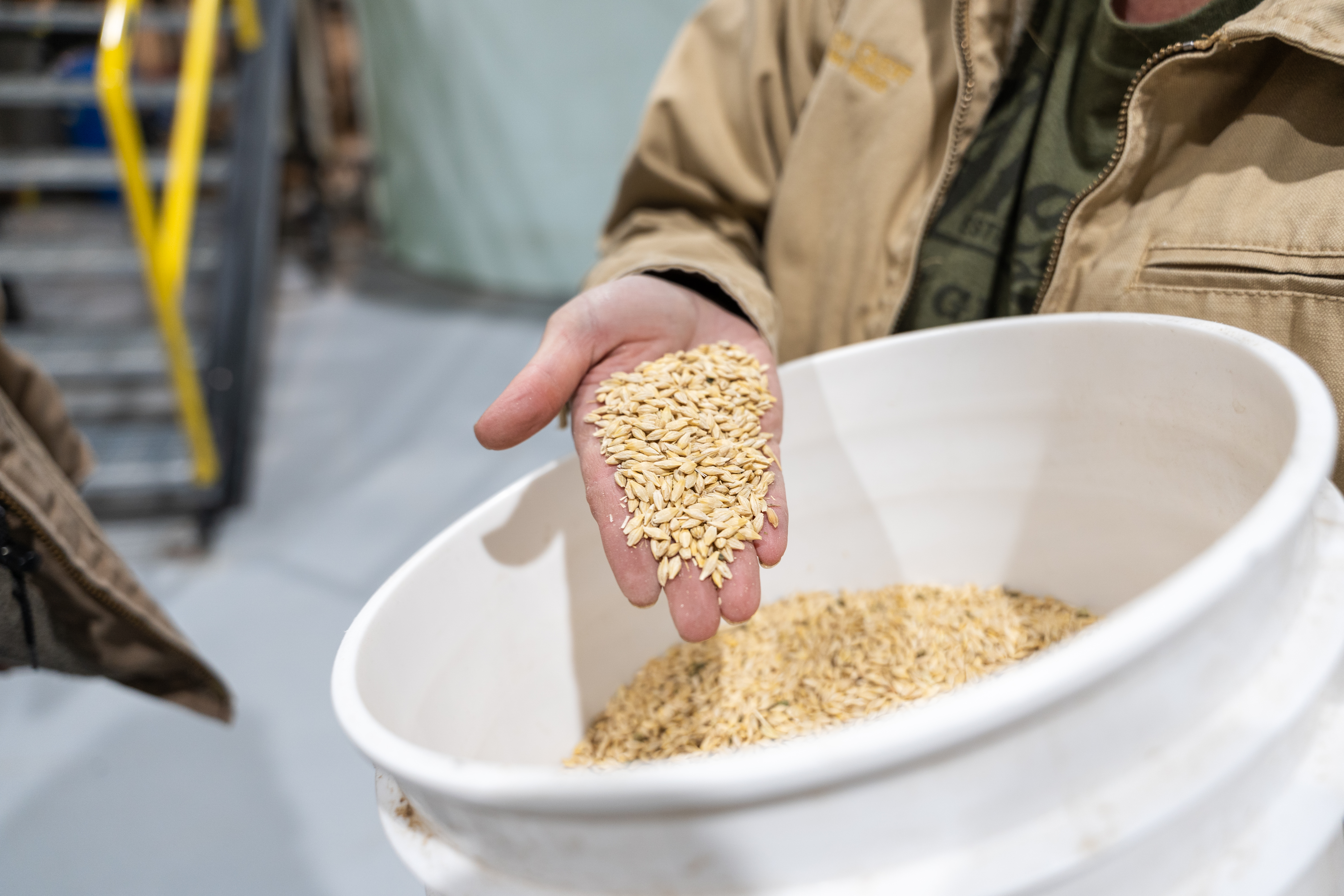
Brewers could potentially use the grain in its early state, but weren’t going to buy it as it was. And, Schwebach would have to fix that if they were going to move forward. It was still a huge gamble for his family with a lot at stake, but it’s his family’s support that kept his nose to the grindstone.
Schwebach’s father and business partner had been against the malting endeavor from the start, but he wasn’t unsupportive of his son. He said, “I got enough money when I die; I’m going to be fine. It’s you and your kids (that) you’re gambling with. So do what you want to do. But, I got faith in you.”
Soon after, Schwebach had a heart to heart with his wife.
He said to her, “The opportunity is here. Do we take it? Do we not take it?”
She looked at him and said, “Ryan, you haven’t let this go. You’ve been dabbling in this for how many years? Why should you not?”
Schweback laid out all the reasons he could think of as to ‘why not.’
“Are those reasons that you just laid out for not taking a lease on this, the same as the reasons why not to taking on the trucking industry, why not to do all these other things we’ve done throughout the year? Do you enjoy this?” she asked at last.
Schwebach thought for a moment and said, “Yes, I do.”
“Then you have not given me a reason not to. You’ve just given me obstacles you have to overcome,” she said.
In the end, all he needed to know was that his wife had his back, and she absolutely did.
And so, the Schwebach family and crew were in.
“And, that’s when it hit me,” Schwebach said. “I have to get educated. I have to figure this out. I got to understand the ins and outs.”
In 2020, Schwebach and Morrow went up to Denver to attend a malting conference, to get to the root of the issue. After a few days, it was as if the sun had parted the cloudy Estancia skies. They knew exactly where they had gone wrong, or at least had a much better idea.
“Coming out of (the conference), I knew where the failures were underground,” Schwebach said. “I knew what to do in the ground (to fix our issues), and what we could do on our farm.”
During this time, Steel Bender was still taking on batches of malt, with then-head brewer Bob Haggerty remaining a huge supporter of the idea of locally sourced malt. Schwebach and his family continued to learn about malting, continued to run numbers, grow the barley, dialing in batches of malt as they went, but it was still was more of a hobby than a flourishing business.
But, just like most hobbies in the beer industry, you do something enough, you work hard enough at it, and maybe you obsess about it enough, the scale gets larger, and at a certain point, equipment is the next inevitable step.
In 2019, Schwebach and his wife had reached that point.
After putting in a few bids here and there, they found Maltster’s Advantage. They were about to put in a down payment when COVID hit.
Unfortunately, with COVID also came equipment price hikes, but more importantly, a lot of uncertainty in the brewing industry. What was the state of the brewing industry? Where was it headed? How much would they need to brew? At the end of the day, how much grain would anyone be ordering?
“We had all these brewers we were working with saying we have no idea what’s going to happen,” Schwebach said. “We don’t know where we’re going. We can’t guarantee shit.”
And so, Schwebach pulled back from the venture a bit.
They still had a lot of product that wasn’t going anywhere.
Thankfully, Schwebach and the Beer Creek guys had been introduced at an agricultural meeting, and Beer Creek was also very much on board with the idea of growing barley right here in New Mexico.
As growers themselves, they understood the value of locally sourced ingredients, and so when they saw what Schwebach was doing, they jumped in headfirst with support. They soon became the biggest supporters and buyers of Schwebach’s malt product.
“Beer Creek has been 100 percent in support of this from day one,” Schwebach said.
“Matt (Oler) and I were so desperate to see it go. It was like, OK, we’ve got to buy as much as possible, to keep them going,” Headley explained.
Beer Creek was willing to do just about anything to keep the faith in local barley alive, as their head brewer Jami Nordby even figured out how to make good beer with the previously under modified malts, going back through hundreds of years of brewing science and tradition.
Later that same year, Beer Creek engineered the first all-New Mexican beer using their own hops and the malted barley grown on Schwebach’s farm. And now, a great deal of their beers are currently made from New Mexico hops and Schwebach’s malt, and if you’d like to see what New Mexico grown malt tastes like, you can enjoy a pint right now at the brewery off Highway 14.
Around this time, Beer Creek was buying up just about all of the product. But, it still wasn’t being malted by Schwebach. The barley was shipped up to Wyoming, where it was malted. It would come back, and the Beer Creek guys would run down to Estancia to pick up pallets when it was ready.
On the farm side, all that Schwebach and company had learned and applied in the field was doing wonders for the malt.
“We got that pilsner batch dialed in, and it was awesome,” Schwebach recalled.
But, running it up and down from Wyoming just wasn’t economical for the Schwebachs. It was starting to get expensive.
Malting their own seemed just out of reach because the prices on equipment still hadn’t come down since COVID.
“It was starting to look like it wasn’t going to work,” Schwebach recalled.
“There was a moment where we were wondering if it was going to continue or not,” Headley added. “And, that’s when it flipped.”
In December of ’22, Chad Brown from Wyoming Malting called and said he needed more room for aging his whiskey barrels. He asked if Schwebach was still interested in the equipment, and if so, had until the end of the year to make a decision.
Schwebach said, “Shoot me a price. Let me think about it.”
It was just a few weeks until the New Year.
Brown’s offer turned out to be a very good one. And so, even before Schwebach knew how he was going to move the equipment, or where he was going to put it, he pulled the trigger and wrote the check.
Thankfully for him, his good pals at Beer Creek know a thing or two about moving and assembling equipment.
“When I talked to Matt about (moving the facility), he didn’t hesitate. Rich is your guy,” Schwebach said.
Headley and Schwebach then took a quick scouting trip up to the malting facility that February and got a game plan together.
They returned with both the Beer Creek crew and the Schwebach crew including his son, Wiley, and young crewmate Cecil.
Almost immediately, they got to disassembling the equipment, unhooking hoses, loosening bolts, un-wiring electrical panels, all while Cecil and Wylie snaked the larger stuff out via forklift between rows of whiskey barrels, six and a half million dollars’ worth, stacked five barrels high.
They were given three weeks to move everything, but Schwebach didn’t have that kind of time. And so, the crews did it in a week, with three and a half days to disassemble all the equipment, and about two days to load it onto three semis and four gooseneck trailers bound for the 505.

Once back in New Mexico, they unloaded all of the equipment into their barns, where it would sit for a few months until they could build the facility, because as you know, putting up a building these days is still not the quickest, easiest thing to do.
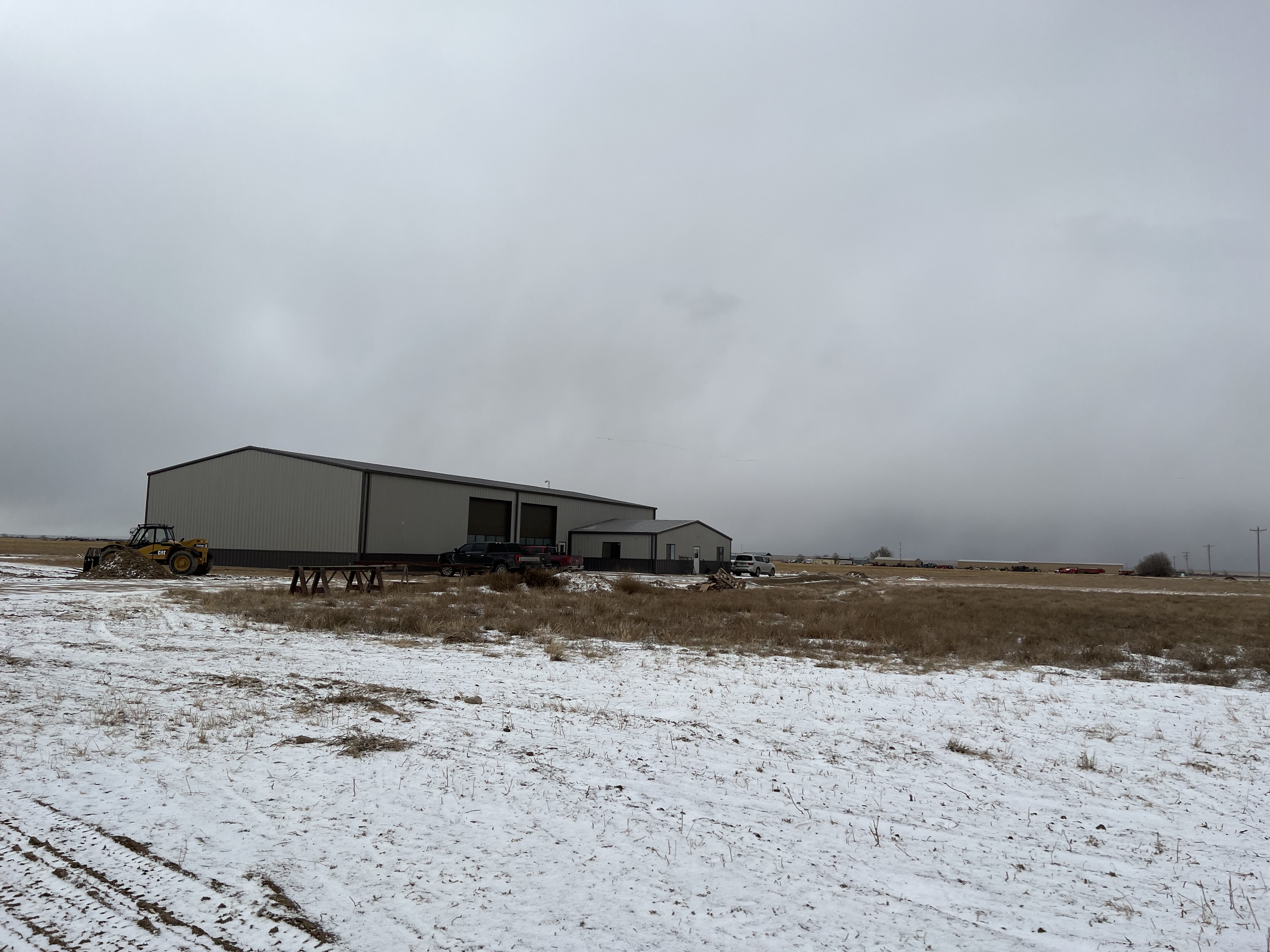
Around June, with permits in hand, they began pouring the foundation for the 8,400-square-foot building in Estancia. And, even though the biggest hailstorm they’d seen in years threatened to stop them dead in their tracks, they were determined not to fail.
Under two inches of water, with power trowels, pumps, and brooms, the Schwebach crew saved the same concrete floor the general contractor had already written off as a lost cause.
The floor may be a bit pock-marked in places, but it’s anti-slip, they joke.
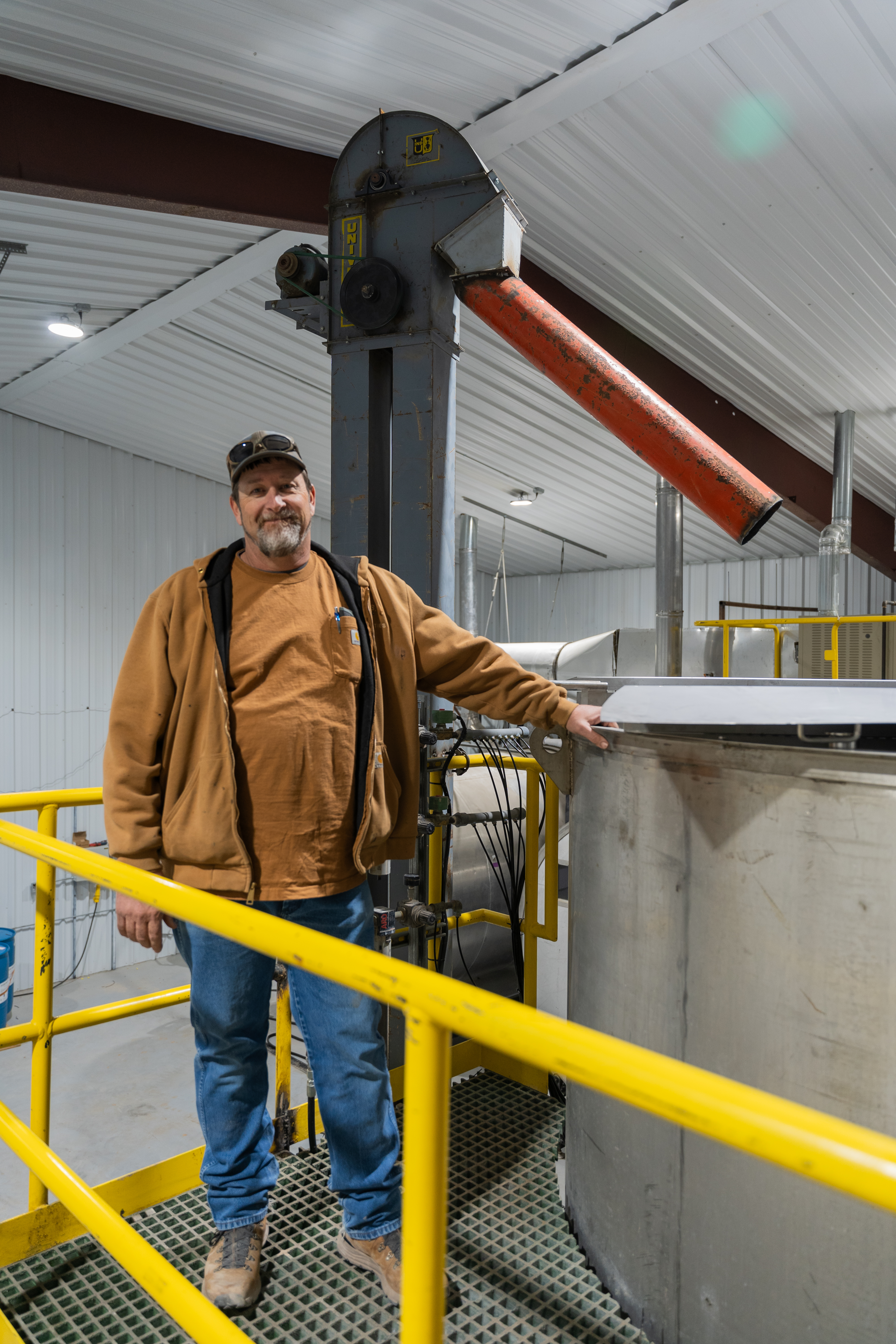
And now, the foundation is set, the walls and roof are up, and the equipment is in and humming away. New Mexico’s malting facility is fully operational.
With an operational facility and plenty of good barley in the bins, all that was missing was a maltster. They needed someone to come in, run the malt house, and see the process through to the final product.
Schwebach didn’t have time to leave all he was doing to become one. He had a business to run, with plenty of day-to-day operations to oversee, and talking with brewers was getting him nowhere.
“They understood brewing, and they understood beer, but they didn’t understand the malt. And, immediately they’re telling me what to do and how to do it, when they don’t even understand the equipment,” Schwebach said.
Schwebach approached it from a farmer’s perspective, from the science to the ground to the equipment, to the best man, or woman to do the work. He knew he needed an expert that would understand the process inside and out, understood the equipment, someone that would be as at home in the facility as on the farm, and someone that wasn’t going to come in and tell everyone what they should be doing. So, instead of hiring out and consulting an expert that didn’t know their family, didn’t know their lands, their ways, they knew the best thing to do was, in essence, grow their own.
Schwebach’s wife knew she had a very capable, intelligent sister, one with a good head for managing daily operations, a sister that was more than up to the task of taking the lead on a huge new project and running with it.
“Have you thought about Jess?” she asked Schwebach one day.
It only took one conversation for sister-in-law Jessica Dossey to agree to attend a malting class up in Maine, and for her, malting just clicked.
“I just could understand it. I could follow it,” she said. “Since then, I’ve spent the last eight months studying up on malt, learning about different techniques, the steep, the germination, and kilning process, understanding and perfecting the modification it takes to get to the levels that we need with the barley.”
She has also been studying for her Cicerone, and jokes that she’s overloaded with beer terminology.
When I spoke with her, I could already tell she was ready to start malting.
The facility was ready to go.
The barley was ready to go.
“We have 450,000 pounds ready to go,” Schwebach said.
At the time of the interview, the maltster (Dossey prefers maltster to maltstress, mind you), had already done mini steeps on several batches, and now, they’ve already worked on several more finished full batches.
Estancia Valley Pilsner malt, distiller’s malt, and Munich malt will be ready for brewers by the end of March.
The Schwebachs will be planting the 2024 crop by the middle of that month, and, pending a good COA (or certificate of analysis), they will be taking orders for their New Mexico English Pale malt as you read this. They’re already working on accounts and emails for ordering, but if you’re interested in purchasing from the new business Schwebach Malz, or have questions for Ryan Schwebach, you may reach out to info@schwebachmalts.com.
From just a few hours with the Schwebachs and crew, touring the facilities, the farms, it’s easy to see that he and his family take their business very seriously. They know what it takes to produce a quality product, and that’s exactly what they aim to do. These products will be tested, analyzed, and held up to the highest standards, because they don’t want to waste their time producing anything less.
Sitting down to lunch with them, speaking with each of them, seeing how capable they are, you can just tell, there is nothing they can’t do once they’ve set their minds to it, because they are determined and they love what they do.

When I asked Jim Schwebach, the father, how he’d come around to the idea of the malting facility, he said, matter-of-factly, “Because, I like beer.”
For the Schwebachs, a few bumps in the road, a few detours, and some bad weather were not reasons to stop, they were only obstacles to overcome.
“When all is said and done, anybody can get a drum, anybody can put in a grain elevator, anybody can put in a claim. But, I think what I really want everybody to understand is that this came from an agricultural-driven background. In my world with the forages, we’ve been able to build a reputation on quality, timeliness of delivery, with our forages, with our hay, it all boils down to how much milk can be produced in that cow. And, my father and I have strived to meet those needs. We’re taking the same idea and applying it here,” Schwebach said.
And so, what does that mean for you as a beer consumer? Well, when what’s in your glass is 100-percent New Mexico made, from “field to brew,” from grain to glass, that sip tastes just that much better, because it tastes of the pride in our local farming and brewing communities.
A special thank you to Ryan Schwebach and his family, crew, and the Beer Creek crew for driving me out to the farm in Estancia (in a snowstorm, no less) and for showing us what New Mexico is made of.
To the dreamers and the doers, and to the success and the growth of Schwebach Malz, cheers!
— Luke

Luke has been writing for the Dark Side Brew Crew since 2014, covering the Santa Fe area and a bit further up north. He’s also brewed and drank a beer or two in his day. Untappd: SantaFeLuke
 DARK SIDE BREW CREW
What a great article! Man there’s alot of work & effort in making us the best local beer 🍺 Nice job Luke 👍
Excellent!